
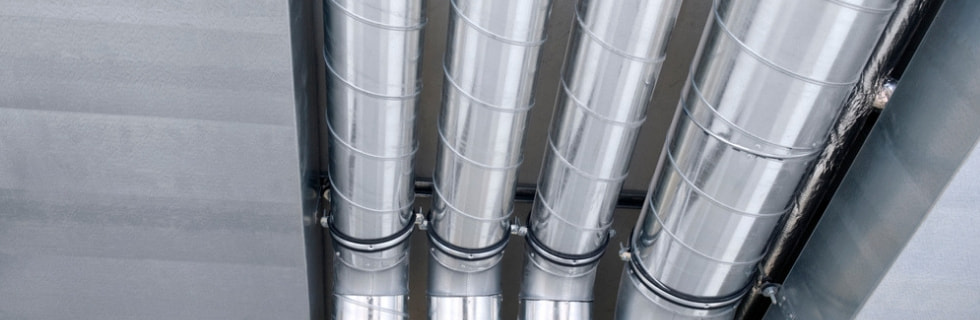
Is your old air conditioner struggling to keep up with your home? Are the air ducts allowing impurities and bacteria to make their way into the air you breathe?
While you can easily fix these issues with some professional help, it may be time to consider going the ductless route. While it may not be for every homeowner, ductless heating and cooling is gaining popularity as an energy efficient and convenient way to control the temperature in your home.
These small-scale systems are ideal for energy efficiency, and can easily be installed with the help of an HVAC pro. So whether you’re on the market for a new HVAC system, want to know your options, or are simply looking for a way to supplement the temperature control in your home, read on to learn.
How do They Work?
Central HVAC and ductless mini split AC systems have two major differences - their size and the way they distribute air throughout your home. A simple breakdown:
 Central HVAC: The standard for many homeowners, a central AC is comprised of an air handler and the ductwork. Inside the air handler, your air is heated or cooled based on your needs using evaporator coils. Once that process is done, the air handler pumps air into your ductwork, keeping the temperatures comfortable throughout your entire home.
- Ductless Mini Splits: A ductless mini split AC system also has an evaporator coil that controls the air temperature, but instead of an air handler, these units have a blower that immediately forces air into your home. Instead of using ductwork, mini splits use zones to cool specific areas of your home. They generally require more than two units to complete the same temperature control as a central HVAC system.
 Central HVAC: The standard for many homeowners, a central AC is comprised of an air handler and the ductwork. Inside the air handler, your air is heated or cooled based on your needs using evaporator coils. Once that process is done, the air handler pumps air into your ductwork, keeping the temperatures comfortable throughout your entire home.
While they look different, they generally have the same internal components that help regulate air temperature. Mini splits are ideal for smaller homes or additional heating and cooling, while your central unit will get the job done for your entire home.
The Impact on Indoor Air Flow
 Because central HVAC is completely dependent on air ducts to distribute air, any damage to that system can quickly have an impact on your home.
Some common indicators that your air ducts need cleaning or repairs include:
- Low airflow
- Fluctuating temperatures
- Hot or cold spots
- Noisy ductwork
- Foul smells
When everything is clean and in good working order, you’ll experience strong airflow and comfortable temperatures. A ductless system always provides strong and consistent temperatures because it’s only responsible for heating or cooling a specific area.
Tips For Saving Space
 If space is a concern for your home, then a ductless mini split AC system should always be the top priority.
Not only do they take up less space when compared to a larger air handler that can take up to a closet, but also they eliminate the need for ductwork, giving you ownership over your attic and crawlspaces.
When it comes to your home HVAC system there is a lot to consider. At Boutwell’s Air Masters we can help make the process easier. Not only do we offer expert installations, but also we can help you through the process of selecting a unit too!